Cagsawa Ruins
Introduction
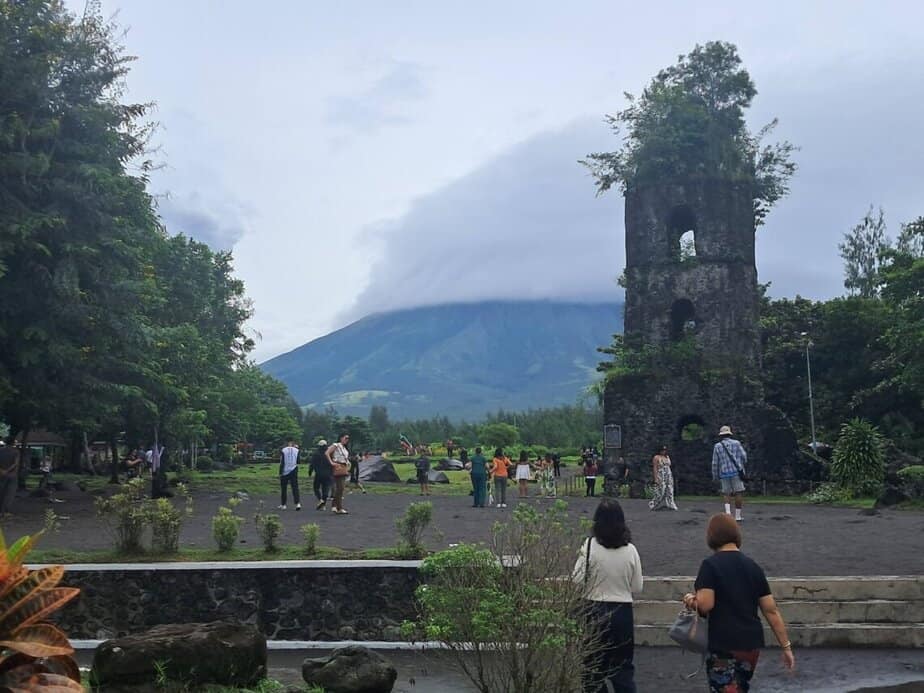
Cagsawa Ruins is one of the most iconic landmarks and tourist attractions in the Bicol Region which recounts a compelling story of the Bicolano faith, resilience, and rich cultural legacy. According to historical records, the Cagsawa belfry serves as a memorial to the Cagsawa church built by the Franciscans friars during the sixteenth century. It was built in 1587 in the thriving town of Cagsawa and it stood as a symbol of the Spanish influence in the region. However on July 25, 1636 the church was burned by the Dutch who ransacked the towns bordering Legaspi Bay. Nevertheless, it was rebuilt by Fray Francisco Blanco in 1724 but was buried by rocks and lava on February 1, 1814 due to the massive eruption of the Mayon Volcano which devastated the towns of Cagsawa, Camalig and other towns of Albay resulting in thousands of deaths. After the volcanic eruption, only the belfry or bell tower can be seen and left in the Cagsawa Church in the municipality of Daraga located in Albay. Years passed by, the ruins of Cagsawa Church were preserved and made into Cagsawa Park which is maintained by the local government of Daraga in collaboration with the National Museum of the Philippines (NMP). Additionally, Cagsawa Ruins has been featured by the Internationale Tourismus-Börse (ITB) Berlin which is the largest travel trade show as a top site to visit in Asia.
Presently, the Cagsawa Ruins is one of the most visited historical site in Albay attracting thousands of domestic tourists every year. It’s a symbol of persistence and communal unity among the Bicolanos. So, if you’re visiting Albay province, include the Cagsawa Ruins in your detailed itinerary where history, and the breathtaking beauty of Mayon Volcano come together in perfect harmony during the summer season.
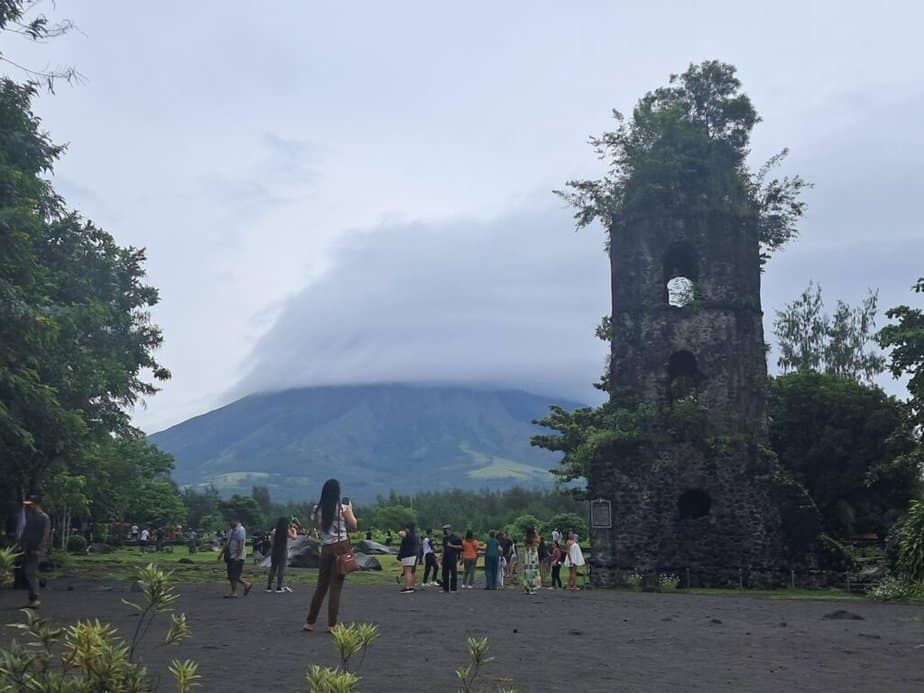
Name: Cagsawa Ruins
Location: Barangay Busay, Daraga, Albay, Philippines
Features: remnants of a historic church and picturesque view of Mayon Volcano
My trip to Cagsawa Ruins
It was Monday noon after my trip to Legazpi Boulevard and lunchtime at SM City Legazpi when I decided to go to Cagsawa Ruins by commuting. After 20 minutes of jeepney ride, the driver alight me at the junction and subsequently I walked for ten minutes going to the entrance of Cagsawa Ruins. Then I paid the entrance fee amounting to 45 pesos and the moment I started exploring the place, I was welcomed by a broad and open topography with an astonishing view of Mayon Volcano which has long been part of the Albay region’s history and daily life. It feels serene, rejuvenating, and perfect for everyone who wants to take a break from busy city life.
Then as I continue to move forward I see a bunch of tourists taking pictures in front of the lone belfry surrounded by lush greenery with Mayon Volcano in the backdrop. Some tourist love to be told in pictures that they are higher than the bell tower by using separation to create such an illusion. As I observed, the belfry is very interesting and is made of coral and brick stones, and it has survived many earthquakes, typhoons and volcanic eruptions throughout the years.
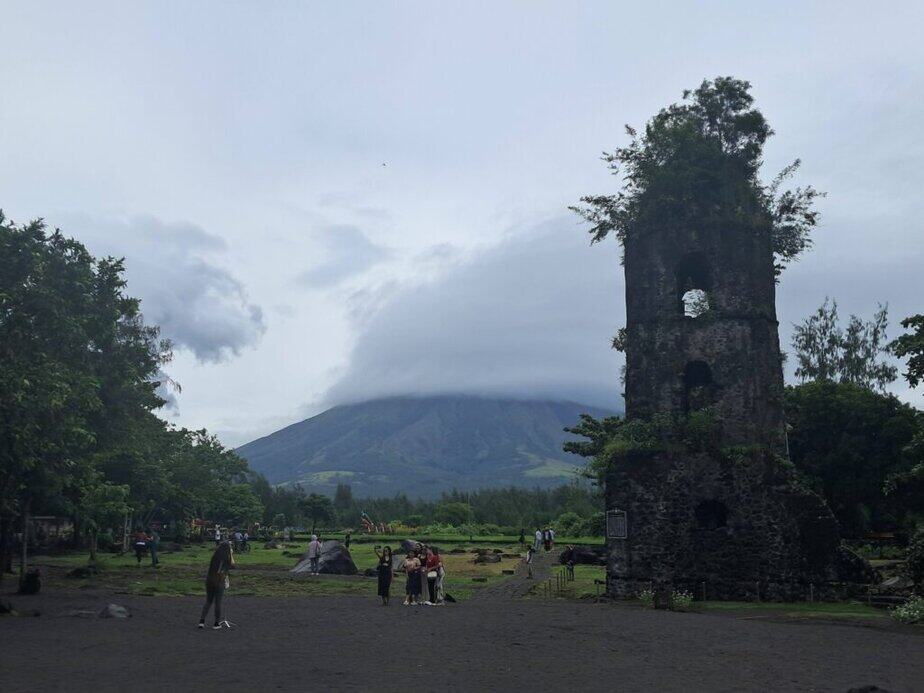
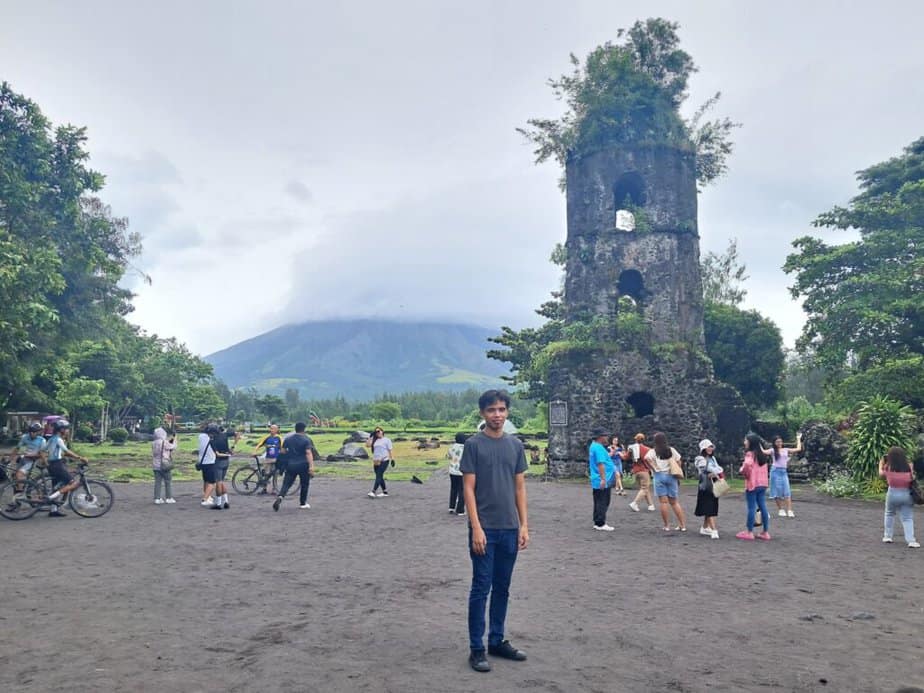
I take pictures of the belfry and I’ve waited leniently at one of the benches available hoping for the Mayon Volcano to show up fully but it never happened because of the chunky clouds surrounding the active volcano, it wasn’t the perfect cone that I anticipate to see so I feel a little bit disappointed. As I roam around I can see several stores selling handwoven bags, accessories, stone carvings, keychains, tshirts, pili nuts and sili ice cream made from fresh labuyo extract that has levels of spiciness which is a unique delicacy.
As I learned the history of Cagsawa Ruins in the historical marker, I told myself that this picturesque landmark candidly substantiates the enormous loss, and unwavering resilience and perseverance of the Bicolanos withstanding whatsoever challenges. In my opinion, the Cagsawa Ruins are a proof to the power of nature and it stands as an image of tenacity of the Filipinos.
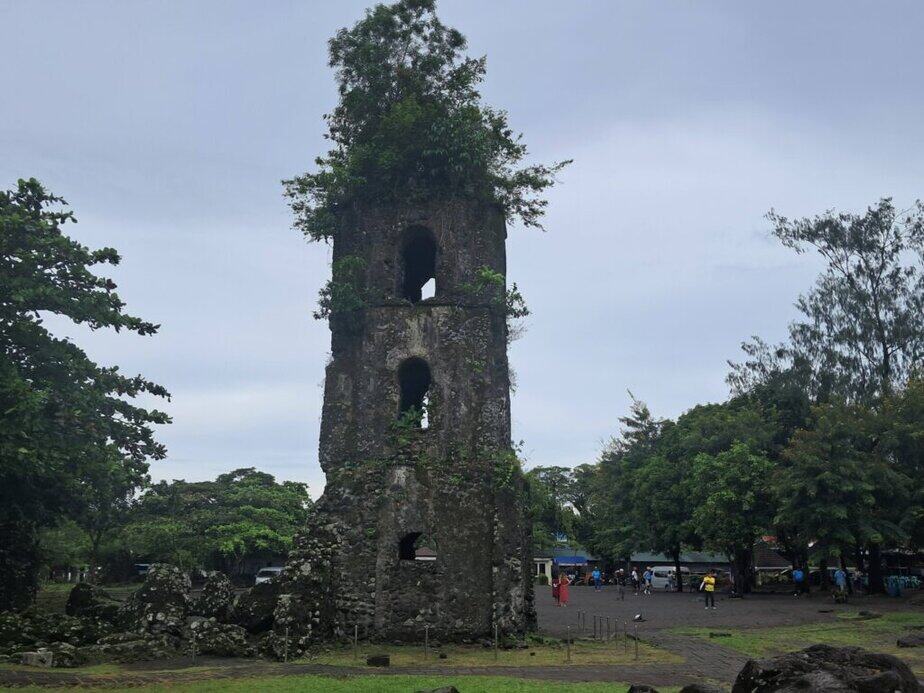
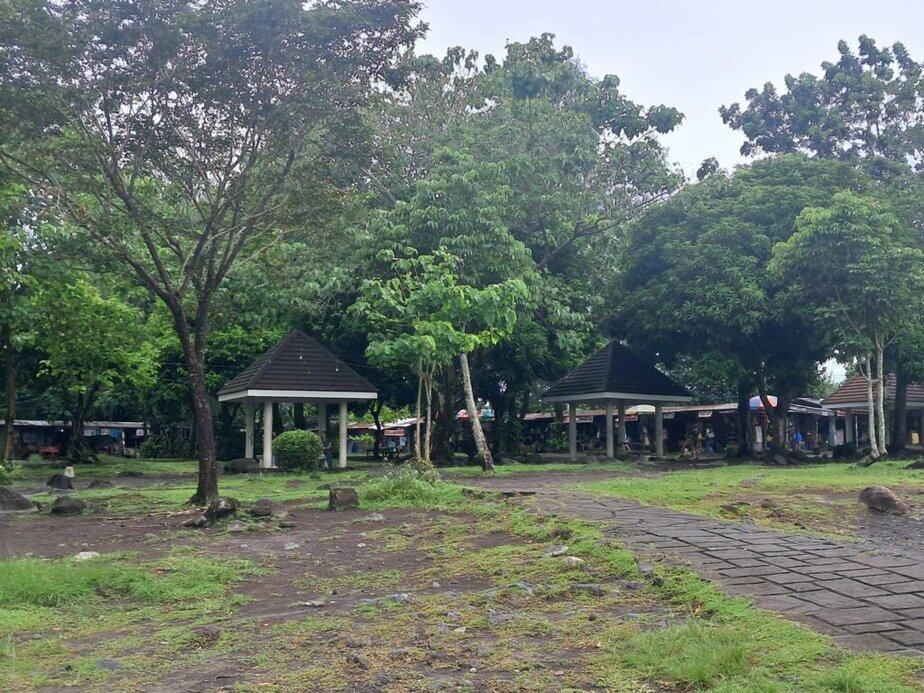
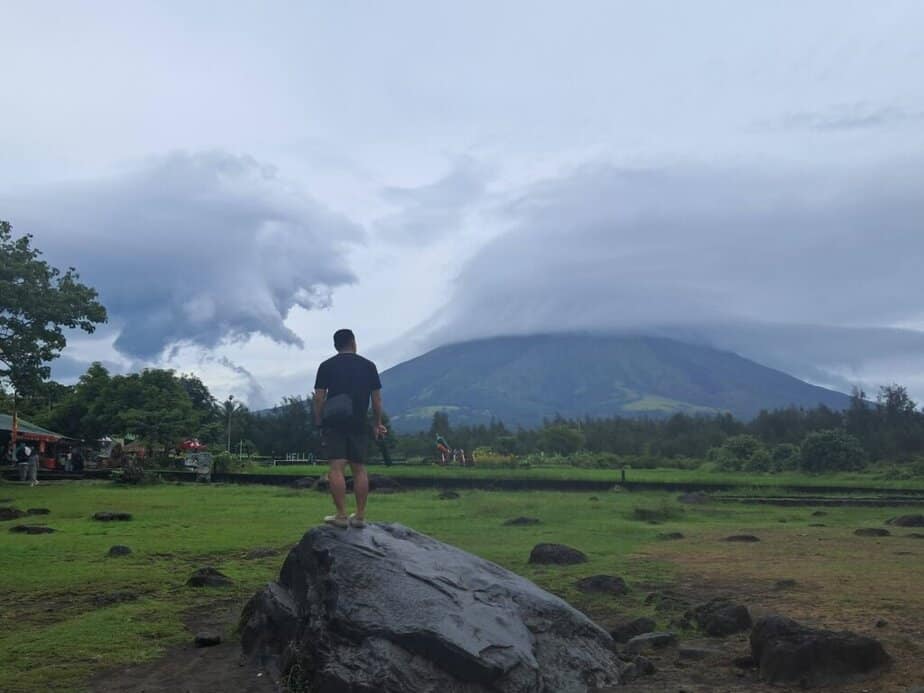
Even though I didn’t see the full glory of Mayon Volcano in the background, I was so happy that I finally visited this historical place because I only saw the Cagsawa Ruins and Mayon Volcano on textbooks, postcards and fridge magnets in my elementary and high school days. Truly, Cagsawa Ruins is a striking story written in ash and rain. It still looked alluring even without the picture-perfect Mayon Volcano in the backgroud. It’s a perfect spot for photographers and history lovers. To be honest, the Cagsawa Ruins Park is well maintained and capacious which makes it enjoyable for simply walking around, taking photos and relaxing with family and friends.
On the whole, it was a very noteworthy vacation for me and visiting Cagsawa Ruins Park is one of the best experiences I had in Bicol. The entire area is filled with a serene atmosphere, fresh air, and dazzling scenery that makes me appreciate the environment even more. Also, I finally witnessed the charm of these ruins and learned that the Philippines is a country rich in history, heritage and fascinating blend of cultures. Whether you’re a history fanatic, a nature lover, or a thrill-seeker, this historical site in Daraga, Albay offers something for each and every one, from heritage walks to rip-roaring off-road ATV drive and stupendous photography. I stayed at the Cagsawa Ruins for an hour and after that I went to Daraga Church.
How to Go to Cagsawa Ruins
By commute
From Pacific Mall in Legazpi City, ride a jeep with signage of Guinobatan and tell the driver to drop you off near the Cagsawa Ruins. After you alight at the highway junction, walk for eight minutes heading to Cagsawa Ruins. The jeepney fare is 25 pesos.
Reminders and Tips:
- Cagsawa Ruins entrance fee for adults is 45 pesos per head. For senior citizens and PWD (Persons with Disability), the entrance fee is 30 pesos per head. For students and children the entrance fee is 10 pesos per head. Note: discounts can only be availed upon presentment of valid ID.
- The parking fee for cars is 30 pesos and the parking fee for motorcycles and tricycles is 20 pesos.
- There’s a handful of tourist attractions near the Cagsawa Ruins such as the admired baroque-style Daraga Church which is just ten minutes away, Sumlang Lake in Camalig which is 4.5 kilometers away, Quitinday Hills which is 30 minutes away, and Farm Plate in Gabawan which is 6 kilometers away.
- The best month to visit the Cagsawa Ruins is from April to May and the best time to visit is from 7am up to 10am to have an unobstructed view of Mayon Volcano.
- If you want to experience the Mayon off-road ATV adventure that will take you closer to the uneven landscapes encompassing Mayon Volcano, the MayonSkyDrive offers different trail from beginner-friendly (short scenic route) to advance trails (rugged off-road challenge) such as Mayon lava trail which is 3 to 4 hours ride and the price is 2600 pesos, Black lava trail which is 2 to 3 hours ride and the price is 2250 pesos, Green lava trail which is a 2 hour drive and the price is 1850 pesos, Skydrive combo trail which is a 1 hour drive and the price is 1250 pesos, Cagsawa forest trail which is a 40 minute drive and the price is 950 pesos and Skydrive grassland good for 30 minutes and the price is 500 pesos. Please make sure to wear the provided helmets at all times.
- Lastly, given the location of Cagsawa Ruins near the Mayon Volcano which is the most active volcanoes in the Philippines, it’s crucial to stay updated on PHIVOLCS (The Philippine Institute of Volcanology and Seismology) advisories regarding volcanic activity and danger zone.
There you have it, wanderer. Yesterday is history, tomorrow is a mystery but today is a gift. I do hope you get a chance to see the famed Cagsawa Ruins one day. Keep moving forward, opening new doors, doing new things and say yes to new escapade and discoveries. Wonderment keeps leading us down new paths and let’s get to know more about our history.

Jervis Ergino
Hi! I’m Jervis Ergino, the digital content creator behind Hike to Mountains, a travel and hiking blog in the Philippines. This blog is dedicated to helping people know more about the best hiking and tourist destinations in the Philippines.