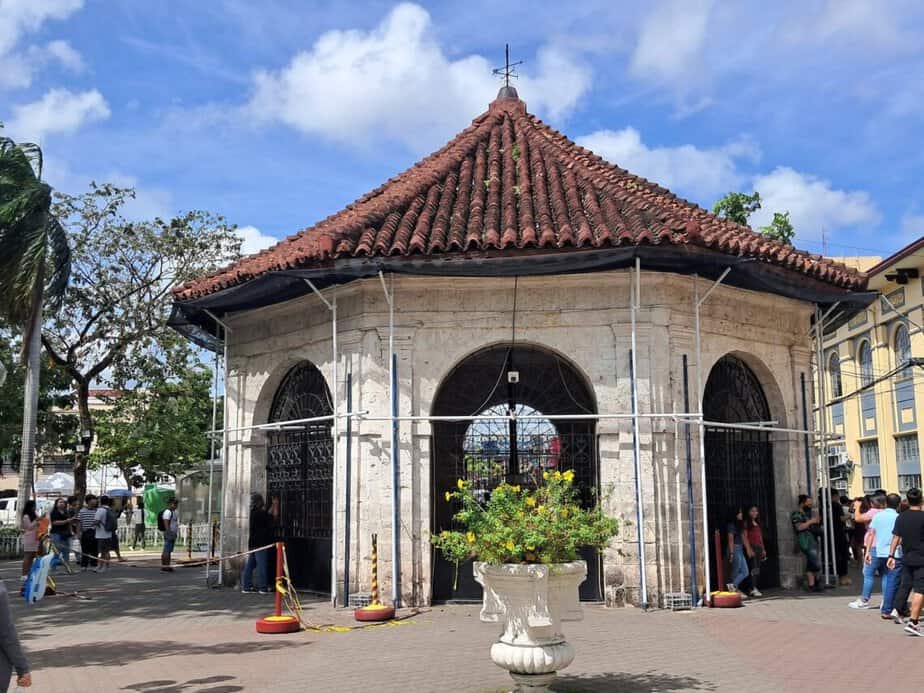
Magellan’s Cross in Cebu City
Introduction
Magellan’s Cross is the most historical and religious tourist attraction in Cebu City. It is located in Plaza Sugbu on Magallanes Street, just beside the Cebu City Hall and Basilica del Santo Niño. It houses a Christian cross believed to have been planted by explorers of the Spanish expedition of the first circumnavigation of the world led by Ferdinand Magellan, upon arriving in Cebu in the Philippines in 1521. According to its history, Ferdinand Magellan who is a Portuguese explorer arrived in Cebu in 1521 and he met and befriended the local chief Rajah Humabon. Rajah, his wife, and hundreds of his indigenous warriors later agreed to be baptized by the chaplain of the Spanish fleet. Also, Magellan gave Humabon’s wife an image of the Sto. Niño, a small statue of the child Jesus as a baptismal gift. Later that day, a mass was held and then a cross was erected in Cebu which symbolizes the birth of Christianity in the Philippines. From time immemorial, this spot has been set aside to commemorate the erection of a cross in Cebu by the expedition of Magellan. Fast forward to April 14, 2021, the Magellan’s Cross along with the Basilica Minore del Santo Niño was declared a National Cultural Treasure of the Philippines by the National Museum through the National Quincentennial Committee of the Philippine Government during the 500 Years of the Introduction of Christianity celebrations. Presently, the original cross brought by Ferdinand Magellan, who led the Spanish expedition to Cebu in 1521, is believed to be encased in a large wooden cross. Magellan’s Cross is housed in an octagonal pavilion called the kiosk. It holds a very big part of the history of Cebu, and it is visited by thousands of visitors monthly.
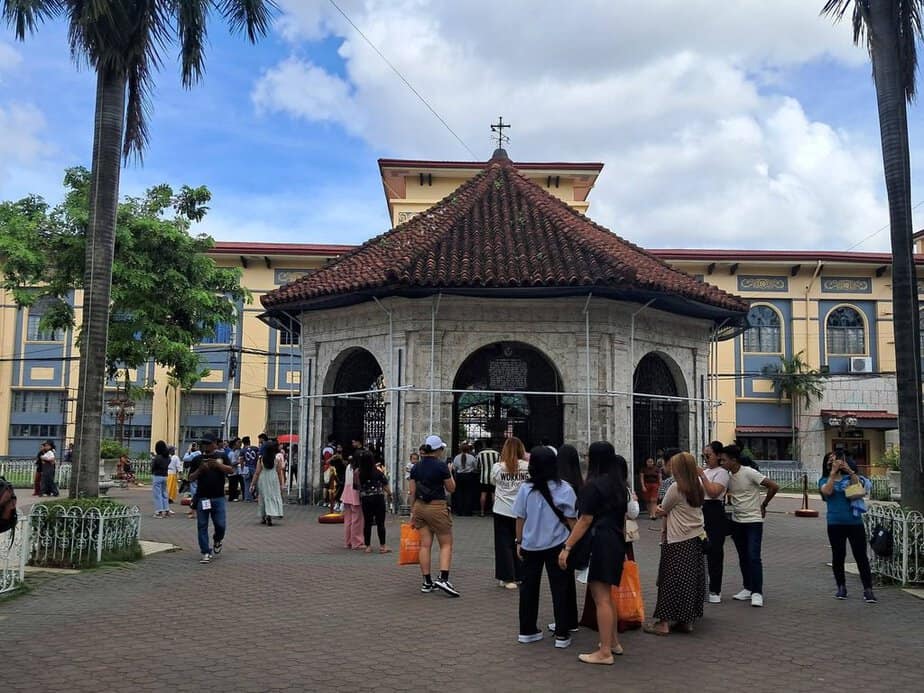
Name: Magellan’s Cross
Location: Plaza Sugbu, Barangay Sto. Niño, Cebu City
My trip to Magellan’s Cross in Cebu
After I finished shopping at SM City Cebu, I decided to go to Magellan’s Cross because, since I was a child, I’ve loved history. I rode a jeep in front of SM City Cebu, and after twelve minutes, I alighted at Colon Street, which is considered the oldest street in the Philippines. Then I started walking towards the Magellan Cross, and after two minutes, I finally reached the Magellan Cross. The first thing I noticed was that this historic landmark is near the Basilica of the Santo Niño and Cebu City Hall, which is in the heart of Cebu City. Also, this small landmark is like an octagonal gazebo made of coral stone and concealed with a red-tiled tegula roof. It is well-maintained and preserved, and it houses a valuable relic and marks an important spot for Cebuanos. Then looking through the gates of Magellan’s Cross, I appreciate the fascinating history behind it. Also, I read the small plaque beneath the cross explaining that the original cross has been encased in tindalo timber to protect it from other elements.
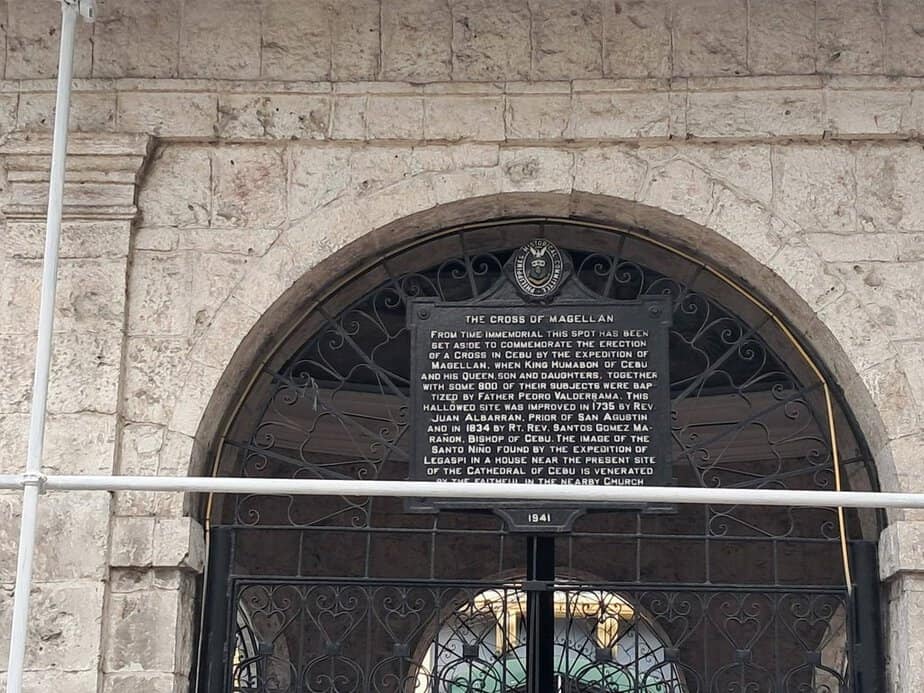
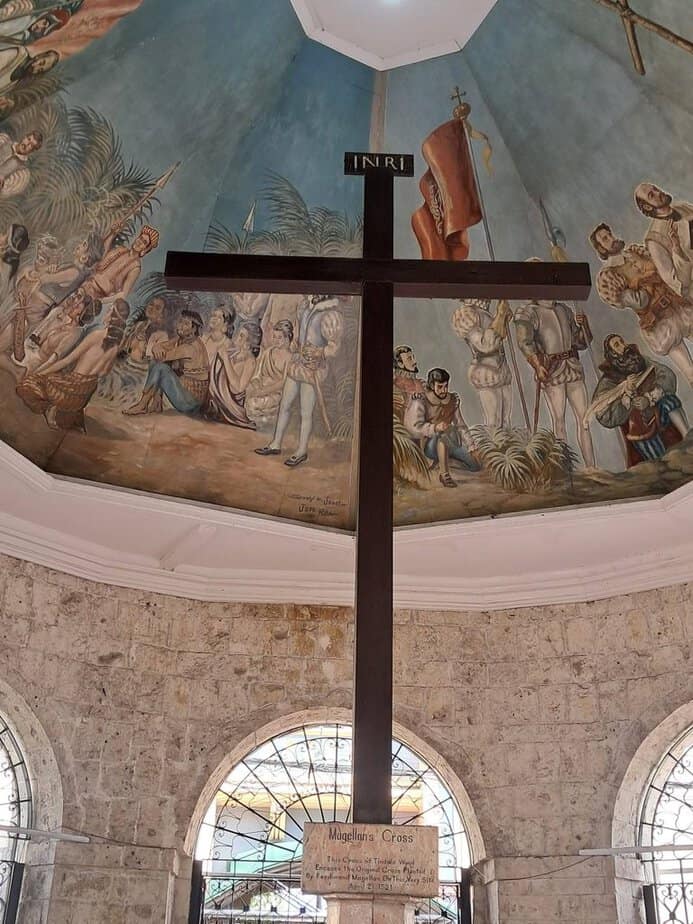
The large wooden cross I see inside is actually a protective sheath made of tindalo wood. The original cross planted by Ferdinand Magellan on April 21, 1521 is securely enclosed within it to protect it from people who once chipped off pieces of the wood as souvenirs or because they believed it possessed miraculous healing powers. Then I noticed that the murals on the ceiling of the pavilion are wonderful, portraying the story of the arrival of Magellan, the first mass, and the conversion of Cebuano people to Christianity. Also, it transported me back in time when our ancestors fought for our independence. In my opinion, this historic landmark is very significant to Cebu’s rich heritage.
A few minutes later, I asked one of the vendors nearby to take a picture of me standing in front of the Magellan’s Cross. Fortunately it was not crowded, and I got the best angle, and it didn’t disappoint me. Later he told me that he’s the one who took the pictures of the famous celebrities who dropped by to visit this historical place. Nonetheless, he refused to get paid for taking photos of me but I insisted on giving him a small amount of money as an appreciation. Then I noticed that some devotees are allowed to offer unlit candles as prayers and acts of devotion, and visitors are welcome to do so respectfully. Without a doubt, it’s a nice place for educational purposes, quick sightseeing, picture taking, and learning history.
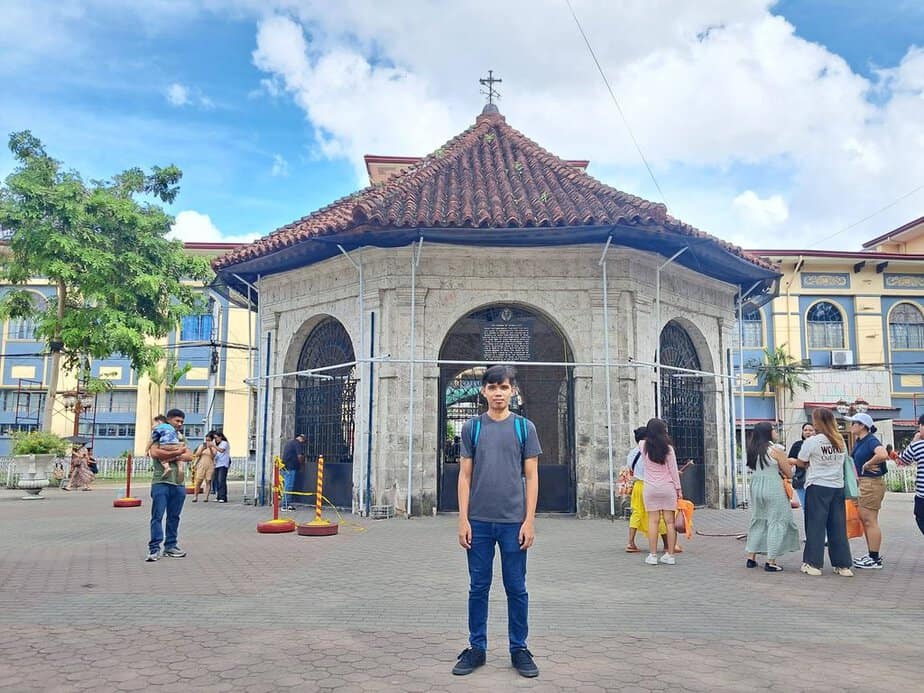
Speaking of history, according to my research, the original wood in Magellan’s Cross is believed to be encased within the larger cross to protect it from damage, as people in the past chipped pieces away, thinking it held healing properties. Some locals believe that the cross holds mysterious powers, while others argue that it is a replica created by the Spanish during the colonial period in the Philippines. Anyway, from my point of view, although the cross is a popular tourist attraction, I soon realised that it should not simply be viewed as one. It is not there solely for tourists, but for those who hold deep religious beliefs. The Philippines is a deeply religious country, and for many Filipinos, the cross represents an important symbol of their faith. The place offers a peaceful and historic atmosphere that allows visitors to appreciate its cultural significance. While I personally found the site somewhat underwhelming, I came to understand that others can find a much deeper sense of meaning and significance in the place than I could. Standing beneath it serves as a reminder of how this pivotal moment paved the way for significant cultural and historical transformations in Cebu and throughout the archipelago. Overall, Magellan’s Cross is an essential destination for those interested in Philippine history and Cebu’s vibrant cultural heritage. It stands as an enduring symbol of Cebu’s rich historical heritage.
How to Go to Magellan’s Cross
Option 1:
From SM City Cebu, ride a jeepney with a Colon sign and get off at BDO Cebu Legaspi near the Petron. Then walk a short distance for two minutes going to Magellan’s Cross.
Option 2:
From Ayala Center Cebu public utility vehicles (PUVs) terminal, ride a jeepney route 14D and alight at Colon Street, then walk a few blocks towards Magellan’s Cross.
Reminders and Tips:
- Magellan’s Cross is open from 8 am and closes at 6 pm. There’s no entrance fee at Magellan’s Cross so expect it to get crowded with tourists and vendors nearby.
- After visiting Magellan’s Cross, you can go to the nearby historic Basilica del Santo Niño to attend a Mass. Just make sure to dress in proper attire. The weekday Mass schedule runs from 6 a.m. to 7:30 pm. In addition, you can go to the well-known Carbon Market, which is the largest public market in Cebu City, and it’s just a short distance from Magellan’s Cross.
- Also, you can go to Cebu Metropolitan Cathedral which is the ecclesiastical seat of metro Cebu Archdiocese in the Philippines, and it’s located just a few meters from Basilica del Santo Niño.
- From Magellan’s Cross, you can ride a mini air-conditioned bus on Colon Street going to Ayala Center Cebu.
There you have it, history lover. Every journey through Cebu City deserves a stop at Magellan’s Cross to feel a sense of history and tradition. Thanks for reading, and have a nice day ahead.

Jervis Ergino
Hi! I’m Jervis Ergino, the digital content creator behind Hike to Mountains, a travel and hiking blog in the Philippines. This blog is dedicated to helping people know more about the best hiking and tourist destinations in the Philippines.


